It was scarcely a month ago that the final day of Stamford International Music Festival 2025 came to a close. This annual gathering of extraordinary young musicians to perform intimate chamber music works was the brainchild of my sister, Freya Goldmark, and as her sibling I’ve been privileged to watch each festival grow and evolve up close. This year’s festival finale, centred on the ‘Sounds of Spain’, offered something very special: a world premiere rearrangement of El Sombrero de Tres Picos (‘The Three-Cornered Hat’), a ballet by Manuel de Falla, one of the founding fathers of modern Spanish music, by the pianist Joseph Havlat.
De Falla was born in the Andalucian city of Cádiz before moving to Madrid, where, under the guidance of the older musicologist Felipe Pedrell, he began to study the folk music of his native Andalucia, most importantly the cante jondo – the ‘deep song’ – from which modern-day flamenco was born.
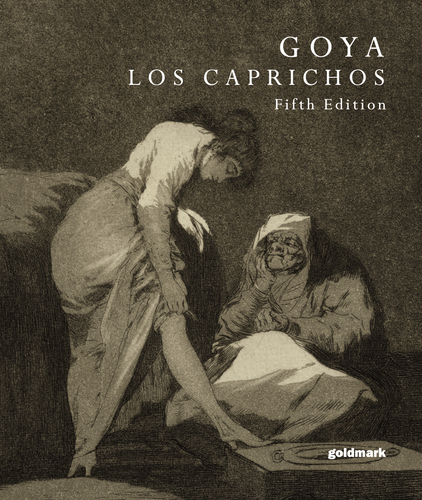
 Francisco de Goya, Que Se La Llevaron, etching & burnished aquatint, from the 5th edition of 210,1881-86
In The Three-Cornered Hat de Falla’s dedication to the music of his birthplace is given full expression: its whimsical storyline – the failed seduction of a miller’s wife by a sleazy magistrate – belies a bristling, impassioned spirit. On meeting de Falla at Igor Stravinsky’s invitation in 1919, Sergei Diaghilev, director of the Ballets Russes, insisted on staging it. Together they travelled across Spain with the choreographer Leonid Massine in tow, imbibing traditional Spanish culture (and plenty of manzanilla) for inspiration, and commissioned Picasso to design its costumes, sets and resplendent curtain.
With such a heady backstory to live up to, the evening did not disappoint: a promise of stomping, clapping, whooping jaleos and rattling castanets was delivered with fitting passion. Only afterwards did I learn the ensemble had enjoyed just one rehearsal before the premiere: for this major first performance they were, as one musician put it, ‘flying by the seat of their pants’. We hadn’t noticed: we’d heard only the giddy hell-raising, the fire, the deep lamentation and raucous joy one comes to expect from Spanish folk music. One lady, her family from the Canary Islands, approached my sister in tears after the performance: “They would have cheered you in Spain!”, she blubbed. And perhaps in Spain, to describe this rousing performance, they might have used another word: ‘¡Esto tiene mucho duende!’ – ‘This really has duende!’

Russian choreographer and dancer Leonid Massine dancing for The Three-Cornered Hat, c.1920
A Theory of Duende
What is duende, you ask? One of those ‘untranslateable’ words that are yet easily identified, a feeling you immediately recognise when it is described to you but for which we have no one-for-one name. Duende is sometimes meekly described as ‘soulfulness’ or ‘passion’, but for Federico García Lorca, the celebrated Spanish poet who coined this elusive term, duende represented something more viscerally arresting.
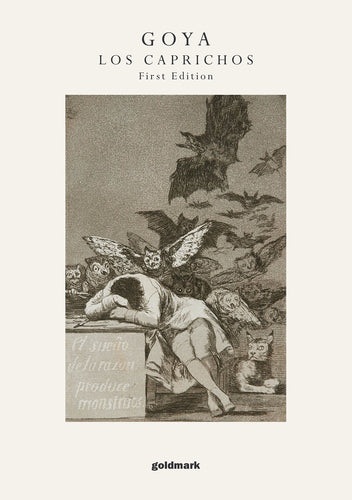
In the now-famous lecture Juego y teoría del duende (‘Play and Theory of the Duende’) given in Buenos Aires in 1933, Lorca first introduced his audience to duende: neither an artistic style nor a psychological condition, but a mythic force – part metaphor, part real daemon – that strikes and seizes a performer in a moment of inexplicable intensity. You encounter duende in moments when art breaks free from technique and polish, revealing the shadow of human suffering, passion, and mortality. It surfaces in a flamenco singer’s trembling voice, in a dancer’s fierce and haunted movement, when a performer has nothing left to give and teeters on the edge of ecstasy and despair. And like death itself, it pays no heed to class, age, experience or proficiency: every one of us is liable to be possessed by its power, given only the right circumstances. Among the more memorable examples Lorca offers of duende in action is of the 80-year-old woman who won first prize at a dance contest ‘competing against beautiful women and boys with waists supple as water’. Like a hooting witch from Goya’s Caprichos, ‘all she did was raise her arms, throw back her head, and stamp her foot on the floor. In such gathering of muses and angels – beauty of form, beauty of smile – it was that moribund duende that had to triumph, sweeping the floor with wings of rusty knives.’
As Lorca’s story suggests, the force of duende demands honesty and courage at the expense of an impoverishment of skill; it arises from discomfort and pain, transforming artifice into something alive. It cannot be forced or planned, but arrives of its own volition from the depths of the soul. In other words, duende is not a thing, but an event, not a quality, but a sensation – or, as Lorca put it, ‘a power, not a work’: ‘It is a struggle, not thought. I have heard an old maestro of the guitar say, “The duende is not in the throat; the duende climbs up inside you, from the soles of the feet.” Meaning this: it is not a question of ability, but of true, living style, of blood, of the most ancient culture, but also of creation enacted in the moment.’

Picasso’s painted curtain for Manuel De Falla’s Three-Cornered Hat, c.1919. Previously installed at the Four Seasons Restaurant in the Seagrams Building, in 2015 it was moved to the New York Historical Museum
Master of the House
When he delivered his lecture, Lorca had his audience believe that in duende he was describing an ancient phenomenon particular to Spain and the Spanish people, a calling card of its rich cultural heritage. Wandering all over the country – across ‘the bull’s hide stretched between the Júcar, Guadalfeo, Sil or Pisuerga rivers’ – you might hear people invoking the concept of duende, he implied. But to most Spaniards, the word would have summoned a very different image.
The word duende is an old one in the Spanish language. It derives from dueño de casa – ‘master of the house’ – a term used in folk tradition to describe mischievous, sometimes malevolent spirits who haunted domestic spaces. These duendes de casa were not benign household helpers; they lurked in shadowed corners, associated with watercourses and ruins, particularly in southern Spain. In the Albaicín district of Granada, Lorca’s birthplace, such creatures were said to inhabit the damp and winding irrigation ditches, its Moorish cisterns and subterranean pools. They were folkloric cousins of the djinn of Islamic mythology: beings of fire and air, at once terrifying and tragic, expelled from heaven and trapped in this world. In older Christianised variants, they became fallen angels – celestial beings consigned to horrible bodies, frightening the mortals with whom they now shared the earth.
Lorca’s own childhood would have been steeped in stories of these traditional duende. True to his own impish, poetic nature, he was not content to simply inherit the term: he transfigured it, seizing on this symbol of the grotesque and uncanny as a new aesthetic category: the duende as a presence that rises from the depths not in stories, but in performance.
To do so, he drew also from the musical culture of his region. Felipe Pedrell, Manuel de Falla’s mentor, had as early as 1914 described the distinctive fioriture of cante jondo – the trills, spills and finger flourishes of flamenco song and guitar – as ‘duendes’: little ‘elves’ leaping round and embellishing a musical refrain. From the early 1920s Lorca had lent his support to the cause of flamenco, an art form which he placed at the heart of his duende theory but which in the early 20th century was still widely despised by reactionaries on either side of the political spectrum. For many its association with Gypsy Roma, and its home in ‘seedy’ taverns, only contributed to the so-called ‘leyenda negra’ – the ‘Black legend’ of Spain: a propagandist image of the country, dreamt up by its Protestant enemies, which presented Catholic Spain as a backwater place of barbaric sadism, ignorance and religious superstition (an image, thanks to its brutal colonisation of the Americas and the cruel reputation of the Inquisition, that was hard to shake). But for Lorca, and de Falla, the true beauty of flamenco, represented by the older cante jondo style, lay precisely in its ‘black’ roots: an acculturation of Arabic music from North Africa, Byzantine liturgical chants, and the traditional song of the gitanos, Romani exiles who had made their way to the Iberian peninsula many hundreds of years ago. Cante jondo was not polished or polite; it was raw, death-haunted, enrapturing, Dionysian in the truest sense – an art of abandonment and intoxication: in short, of duende, dredged ‘from the remotest mansions of the blood.’’All that has black sounds,’ Lorca writes, citing his friend, the legendary flamenco singer Manuel Torre, ‘has duende.’

Federico García Lorca delivers his lecture ‘Play and Theory of the Duende’ on November 14th, 1933, at the Teatro Avenida, Buenos Aires, © Herederos de Federico García Lorca
Master of the House
On the 17th of July, 1936, Generals Mola and Franco, seeking to topple the Republican body politic, launched the coup that would instigate the Spanish Civil War, thrusting the country into a state of martial law and prompting an international flowering of rage among writers and artists. For Lorca, the physical realisation of the Saturnine imagery he had invoked with duende – mansions of blood, Goya’s ‘horrible bitumens’ – would have immediate, tragic consequences.
Lorca did not live to see the full mythologisation of his duende. For years his death remained a mystery; the unofficial account remained that he was likely executed by a Fascist firing squad in the town of Alfacar, near the aptly named ‘Fountain of Tears’ where many of the. 100,000 republicans murdered by Franco’s forces spent their last minutes. Documents compiled in 1965, however, and eventually obtained by journalists in 2015, reveal he had been on the Nationalists’ watchlist as a known socialist and suspected homosexual. After police forces ransacked his home in Granada, he had fled to a friend’s house where, mere weeks after Franco’s uprising had begun, he was soon discovered. There he was dragged inside a police car, driven to a nearby ravine, forced to confess his ‘crimes’, shot in the head, and buried in a shallow, unmarked grave. He was just thirty-eight; his body was never recovered.
In death, Lorca became the very image of the artist touched by duende – not simply because of how he died, but because of how fiercely his life and work embraced danger, intensity, and vulnerability. His martyrdom gave the concept of duende a tragic, political echo it never had before: to write with such darkness, to seek truth with such ferocity, was also – in General Franco’s Spain – to court annihilation.
‘Many Spaniards live indoors until the day they die,’ he had written in his 1933 essay, ‘when they are carried out into the sunlight. A dead man in Spain is more alive as a dead man than anyplace else on earth.’ And so it would be.

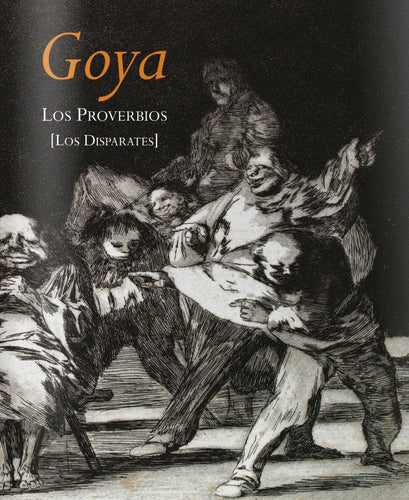
Francisco de Goya, Duendecitos, etching & burnished aquatint, from the 5th edition of 210,1881-86
The mythology Lorca had conjured – fragments of Iberian folklore, reanimated through the ritual of flamenco and cast as the central spirit of artistic authenticity and ecstatic truth – proved magnetic. Duende transformed the way Spanish culture viewed its own expressive traditions, and soon radiated outward. From the Spanish-speaking world, and from the mid-1950s especially, duende began to infiltrate the avant-garde literary circles of North America – particularly among the poets of the Black Mountain school, such as Charles Olson and Robert Creeley, who found in Lorca’s writing a visceral model of artistic presence. It was adopted as an alternative to polished modernism: a vision of poetry and performance as spontaneous, dangerous, and unrepeatable. From there, the idea was mythologised further, embraced by artists and writers seeking a form of authenticity that rejected slick professionalism in favour of the folkloric. In duende, imperfection became sacred. The rough edge, the cracked voice, the irrational metaphor – all were elevated as signs of truthfulness, of life lived in pursuit of poetry.

Poster for El Concurso del Cante Jondo (Contest of the Deep Song), 1922, organised by Manuel de Falla and Federico Garcia Lorca
Before long, duende, and indeed Lorca himself, were remade in the image of the artists and writers who found solace in his words, just as he had rewritten Spanish history to suit his poetic mythology. Duende became Lorca’s great gift and his ghost: the echo of a voice cut short, the brilliance of a flame extinguished too soon, and the darkness that still pulses beneath the floorboards of every theatre, tablao, or page where art dares to risk something real.